
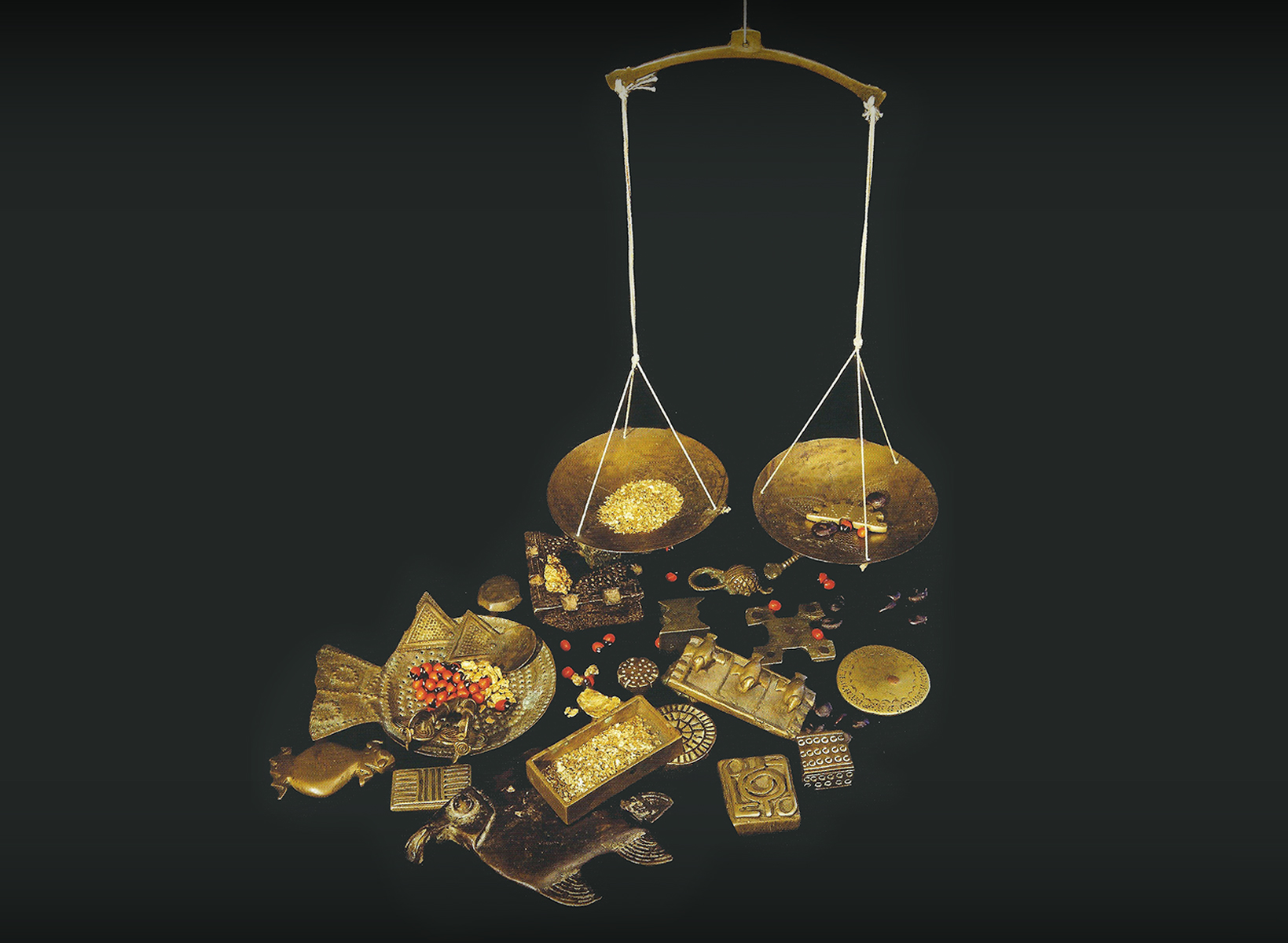
Figure 1: Weights, Balance, and Gold Dust, private collection.
January 1471, Elmina, Gulf of Guinea.
A group of European merchants had their first encounter with a set of unfamiliar objects used to weigh gold dust. One of the white men tried to barter his gun for an African dignitary's gold ornaments, but the latter declined and offered some gold dust instead. To measure the right amount of gold, the dignitary drew a set of scales, a spoon and a bronze box from a bag. The box contained gold powder, which he weighed on his scales against a metal figurine of a crocodile with a fish in its mouth.
The African dignitary was initially urged by his entourage of advisors to pull out of the transaction, but picked this particular weight to communicate to his companions how he had no other choice: the crocodile is king of the waters in Akan symbology and stands for a man in a position of power, one whose wishes have to be fulfilled. In this instance, power resided with the armed white man, who could easily rob the dignitary of his ornaments, which made it advisable to accept his offer.
This account by the French historian R. Cornevin documents one of the first encounters of Europeans with the Akan economic system (Côte d'Ivoire and Ghana). The Akan economy had been based on a system for weighing gold dust using small weights (sikayôbwê) since the 15th century.
Gold was a fundamental resource for the Akan ethno-linguistic group: their land was rich in this mineral, which came to represent wealth, political prestige and the basis of their economy. Gold was traded exclusively in powder form, accurately weighed with scales and small metal weights that were used as units of measurement. According to oral tradition, these weights were created by their ancestors from metals such as bronze, copper and brass, and could be both figurative and non-figurative.
Georges Niangoran-Bouah, an Ivorian ethnologist, believed that all transactions were settled in gold powder, whereas other sources suggest it was only used in deals of a certain import (such as pirogues, food consignments, marriage dowries, taxes, etc.) among certain social groups, like merchants and royal court officials.
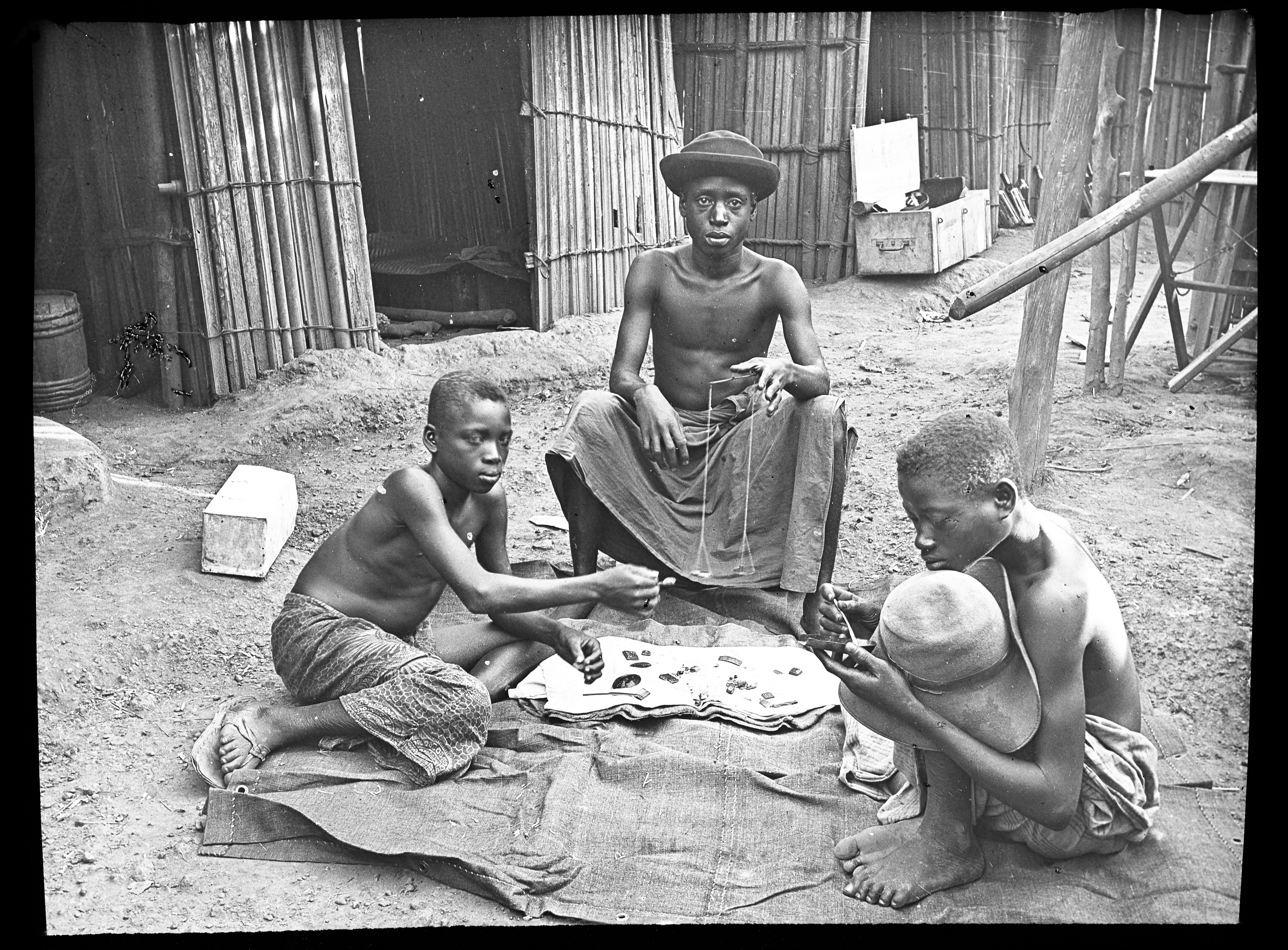
Figure 2: Peseurs d'or, Marcel Monnier, 1892, Côte d'Ivoire. France Noire Cote d'Ivoire et Soudan, Paris, E. Plon, Nourrit et cie, 1894.
Georges Niangoran-Bouah also argued that the weights themselves were regarded as a form of currency by the Akan, although they were not directly traded. In support of this claim, his informants alluded to the origins of these weights. Long ago, when they were not yet made of metal, but carved in stone, they were exchanged directly. The saying 'to find out the price of a good, the Akan ask the stone' could confirm this practice. Niangoran-Bouah believed that a further argument for his thesis were the lexical similarities between the Akan words for 'gold' (sika), 'money' (sikama), and 'weights' (sikayôbwê), though all of his evidence is essentially based on local oral traditions. So, we can't be entirely sure that these weights had other uses than measuring gold dust, which instead was used in transactions as early as the 15th century, as reported by European merchants and travellers.
While we're not exactly talking about coins, the idea of weight-money has become quite widespread, not only on account of this original use, but also due to the confusion over the concepts of 'weight', 'gold' and 'money'.
The use of gold powder among the Akan is similar to the concept of commodity money, which is to say a commodity (like barley, livestock, various metals, etc.) that is used as a means of exchange. We can see an example of commodity money in ancient Mesopotamia, where barley and silver were used in commercial and financial transactions (see Itinerary 1 of The adventure of money). Here too, their value as currency was not guaranteed by an issuing authority but was something tangible, measurable and shared.
Throughout their history, weights have performed different functions outside of economics, in the legal, religious, textual and communicative spheres, for instance.
One clear example is the collection of debts and taxes, where the weights used were carefully chosen for their symbolic meaning. Creditors, for example, might choose a weight that referred to someone keeping their word to repay the amount agreed, or a weight that suggested willingness to negotiate regarding a debt. Rulers could order the creation of new weights to sanction their own authority, collect taxes, introduce new taxes, and set the penalty for the crime of lese-majesty.
We can guess that each weight, whether figurative or geometric, had its own meaning. Figurative weights were commonly associated with proverbs that were part of a common oral tradition and conveyed moral and social teachings.
Some geometric weights featured reliefs or inlays in the form of spirals, symbolizing life, birth and creation. Swastikas were instead considered sacred, representing the union of the complementary principles of feminine (bla) and masculine (yaswa). The union of feminine and masculine is also represented by weights in the shape of two crocodiles forming a cross (Dindjé Blafou) and joined at the belly, an emblem of family solidarity. There is an Akan proverb that says 'Why should we fight over the same prey, if everything we eat and drink with different mouths ends up in the same stomach?".
Weights were stored in a dja, a cloth bag for keeping weights and weighing instruments, a metaphor for human knowledge. Each weight could be seen as a 'page' of Akan cultural heritage, conveyed both by graphic markings only known to certain elites, who stood apart from the rest of a rigidly structured society, and by images and symbols that were understood by everyone in the ethnic group.
In Akan culture, shared knowledge is handed down orally and visually, through images, proverbs and ritual practices. This is a radically different system from the European one, which is centred on the written word. This difference in 'knowledge transmission codes' does not imply a hierarchy between the two cultures, but a difference in the structuring and conveying of thought.
Aside from their link with gold, these objects convey a specific worldview, and tell us about an economic system based on trust, on keeping one's word, and on wisdom embodied in objects. They are a prompt to make us think about what 'money' really is and how it is also linked to the values and culture of a given society.
Today, these small artefacts are much more than economic instruments from the past. They are a cultural legacy, bridges between different cultures and different ways not only of measuring the value of things, but also of ideas, relationships and collective memory.